If a large customer or your bank has started asking for sustainability data, you have probably run into the letters VSME. This is what they mean.
A standard written for the company being asked, not the one asking
VSME is the Voluntary Sustainability Reporting Standard for non-listed SMEs, published by EFRAG. The important word is voluntary: no small company is legally required to publish a VSME report.
It exists because of a second-order problem. Large companies that do fall under mandatory reporting need data about their value chain - which means they need it from their suppliers. Left alone, every large customer invents its own spreadsheet, and a supplier with fifteen large customers fills in fifteen different questionnaires that ask the same questions in different orders.
VSME is the agreed shape of that answer. You fill it in once, in a format your customers already recognise.
Two modules, and you probably only need the first
The standard is split in two.
The Basic Module (B1–B11) is the core. It covers your reporting basis, the practices and policies you have in place, energy and greenhouse gas emissions, pollution, water, waste, workforce characteristics, health and safety, remuneration, and convictions or fines for corruption and bribery. For most SMEs answering a customer request, this is the whole job.
The Comprehensive Module (C1–C9) adds the disclosures that lenders and larger counterparties tend to want on top: your business model and strategy, management of risks, more detailed workforce data, human rights policies, revenue from certain sectors, and your gender diversity ratio.
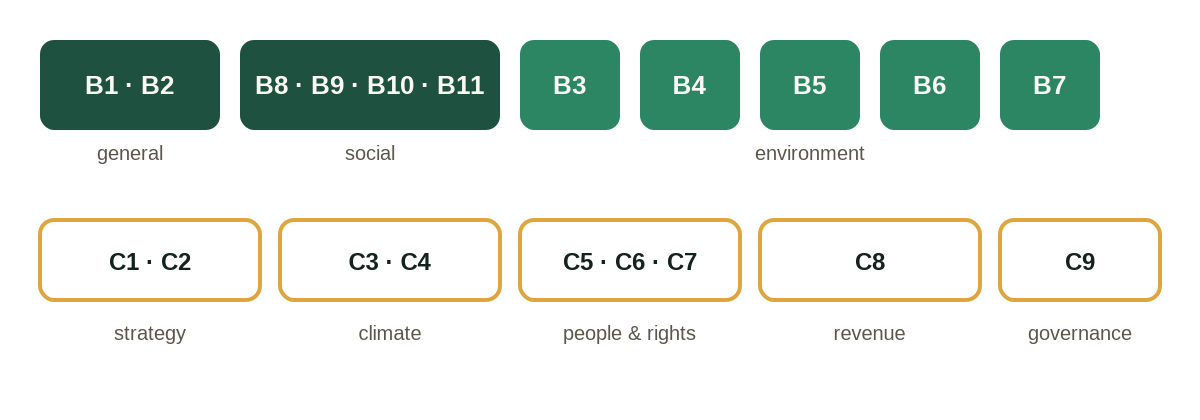
The right default is to complete the Basic Module and add Comprehensive disclosures only when somebody specifically asks for them. Doing C1–C9 speculatively is a good way to spend a fortnight collecting data nobody requested.
What "proportionate" means in practice
The standard was written with the understanding that an SME does not have a sustainability department. Several disclosures are explicitly conditional - if something does not apply to your business, you say so rather than inventing a number. If you have no company vehicles, your Scope 1 mobile combustion is not a research project; it is zero.
The failure mode to avoid is the opposite one: leaving a disclosure blank without saying why. A blank looks like an omission to whoever reads your report. "Not applicable, we operate from leased offices with no owned vehicles" is a complete answer. An empty field is not.
Where to start
Pull together last year's energy bills, your headcount, and whatever you already know about your waste contracts. That covers a surprising share of the Basic Module. The rest is mostly describing what your company already does - you are documenting practice, not inventing policy.
Sources
This post is general information, not legal advice. Rules and official materials change - always check the current text at the official source.